 Français
Sports osteopath in Montreal and Laval

Follow-up tailored to your discipline
Your osteopath assesses your posture, your movements and areas of overload to identify muscular, joint or fascial imbalances that may hold back your progress or increase the risk of injury. The techniques are manual, adapted to your pace and your goals.
- Prevent common injuries by correcting imbalances.
- Relieve joint pain and improve flexibility.
- Speed up your return to activity after an injury, in coordination with your physiotherapist or coach.
- Manage fatigue and recovery between competitions.
The injuries and pains we see most often
- Tendinitis (tennis elbow, golfer’s elbow) and overuse pain.
- Ankle sprain: recovery and prevention of recurrences.
- Back, hip and knee pain related to exertion.
- Preparation and recovery for sports.
Osteopathy complements physiotherapy; it does not replace it: working together allows comprehensive care, from recovery to rehabilitation and the sporting movement.
Before and after competition: when to consult?
Before a competition, a session can help identify tensions that limit your movement so you can start with comfortable mobility. After exertion, it supports recovery and allows early treatment of pain that is setting in.
Running, hockey, cycling, racquet sports, weight training: we adapt the session to your discipline, your level and your schedule.
A 45-minute session focused on your discipline
We listen
We assess and treat
We advise you
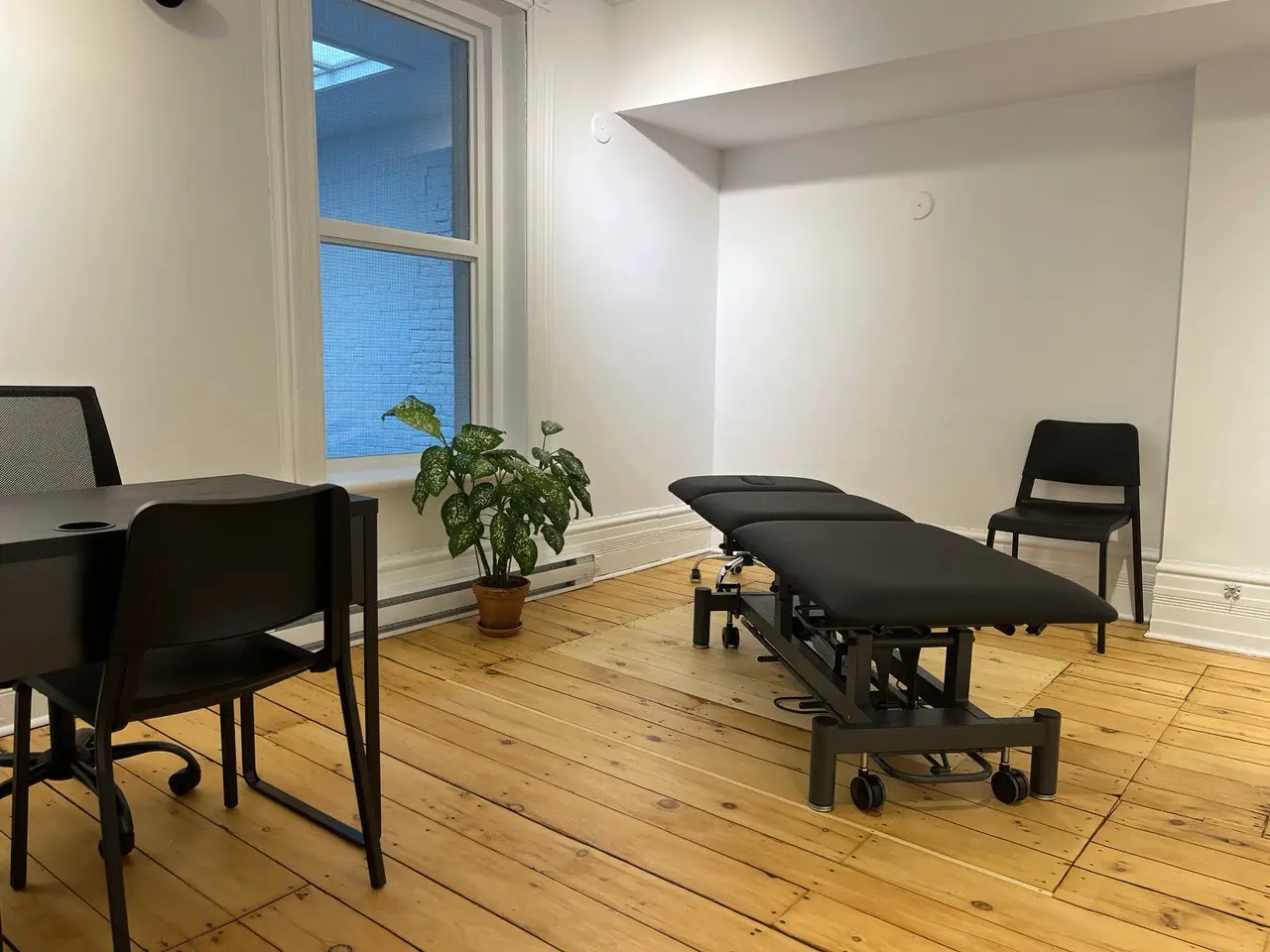
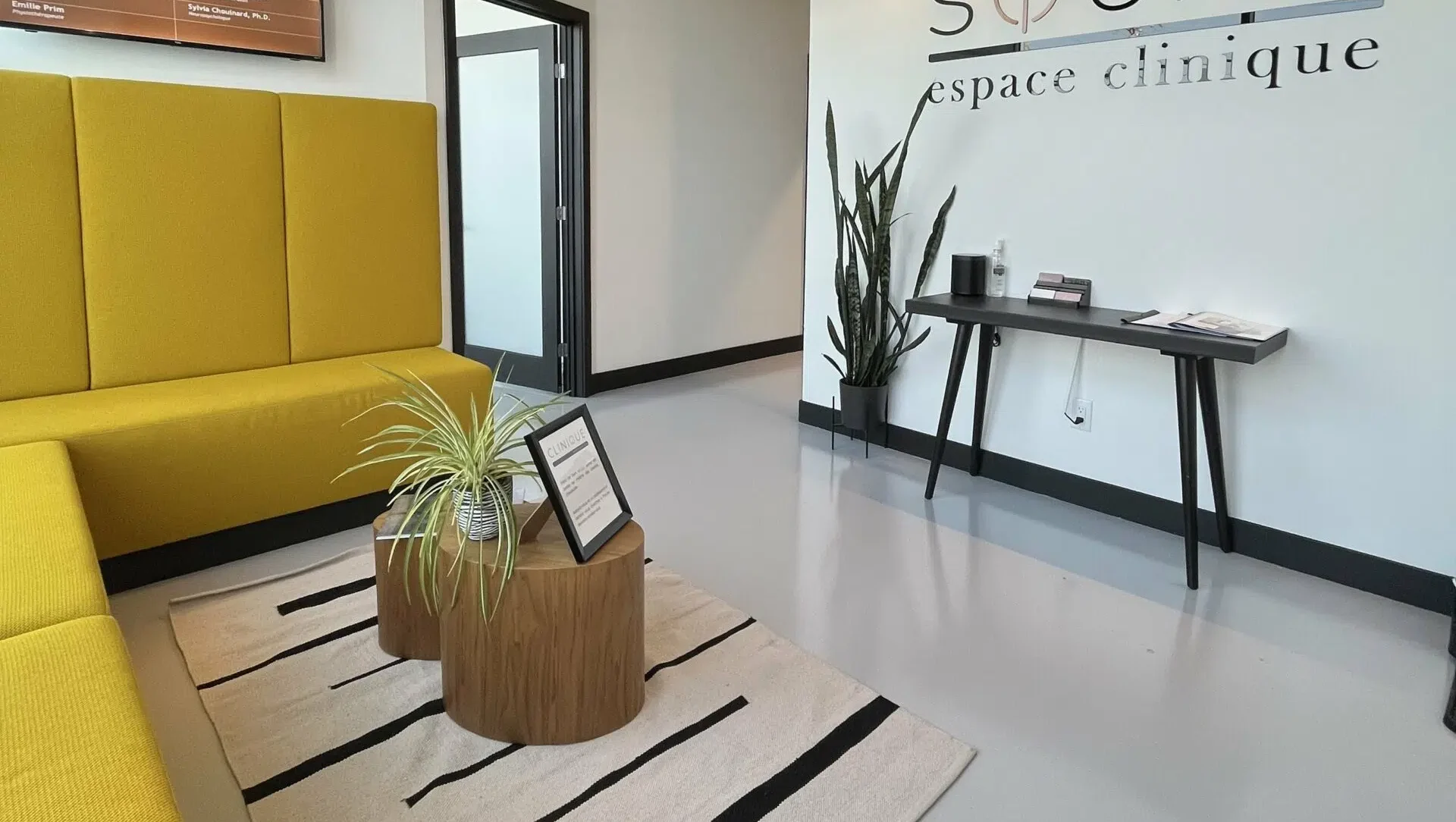
Two clinics to welcome you
Our osteopaths and related care
Our osteopaths see athletes of all levels. You can also meet the Synapsia team.
Sudden pain during exertion? See the urgent osteopathy page. For older back or neck pain, see osteopathy for adults. To learn more: exercises for sciatica, knee osteoarthritis, relief of chronic pain.
Ready to book? Book an appointment online at the Montreal or Laval clinic.
Sports osteopathy: your questions
You can consult after an injury, when pain persists with exertion, to prepare for a season or competition, or to recover better. A preventive assessment is also possible if you are returning to sport after a break. Pain after a significant impact, with obvious swelling or an inability to put weight on it, requires medical advice first.
No, it complements it. An osteopath takes a whole-body view and looks for the origin of an imbalance, often away from the symptom. A physiotherapist focuses more on rehabilitating the injured area, with exercises. The two approaches can be combined depending on your injury and your goals.
Yes. Our osteopaths see athletes of all levels, from the weekend runner to the athlete who trains every day. The care is adapted to your discipline, your training frequency and your goals. We also advise you on gradual return to activity and prevention.
It depends on the injury, how long you have had it and your discipline. Many people feel a change within one to three sessions for recent pain, and more for a long-standing problem. After a 45-minute consultation, your osteopath will give you a tailored plan, with no commitment.
An insurance receipt is provided at every session: reimbursement depends on your insurance plan, group or individual. Check your osteopathy coverage before your appointment. An osteopathy session is $110, taxes included, at both clinics. Payment by credit card, debit card or Interac e-Transfer.
You can come a few days before to check your mobility, or after the event to help recovery. Let us know your schedule when you book, and tell the osteopath so they can adapt the intensity of the treatment. We are open Monday to Saturday, 8 a.m. to 8 p.m.
Osteopathy does not replace medical advice. If you have serious symptoms, see a doctor.